


By Marci Stringham, LCSW – Pain Reprocessing Therapy–trained clinician
Chronic pain has a way of taking over the driver’s seat in life—causing detours, traffic jams, and often full-stops. If you’ve ever wondered, “Why is my body still hurting when my doctor says there is nothing there?” or “Why can’t I find relief for my pain after so many medical interventions?”—welcome. You’re in the right place.
Pain is real. Your experience is real. But the source of pain? That’s where things get interesting.

Acute Pain vs. Chronic Pain
Acute pain is your body’s alarm system doing its job. You stub your toe, the alarm goes off, you yell something your grandmother wouldn’t approve of, and in a few days the pain fades and you are able to walk normally again. Or, you are in a major accident and as your bones and tissues heal, there is pain (of course!) in those location.
Chronic pain, though, is when the alarm keeps going off long after the fire is out. You may have had an initial injury there, but it has been months or years and the area has healed but still hurts. Often the pain can be debilitating, and many people start feeling hopeless that things will ever get better.
This doesn’t mean the pain is “in your head.” It means your brain—which is designed to keep you alive, not comfortable—has started overprotecting you. Think fortress with a moat and four drawbridges instead of a simple lock on the door.

How We’ve Traditionally Treated Pain
Most of us were raised on the “find it, fix it” medical model:
- “It must be a disc issue!”
- “Maybe it’s inflammation!”
- “Let’s try physical therapy again.”
- “Ice it forever.”
- “Let’s just get another scan… or three.”
And doctors are trained in this medical model: a patient comes in and the doctor does tests, scans, and tries to identify the source of the pain and heal it. However, while these treatments absolutely help in acute situations, research now shows that for chronic pain, they rarely solve the problem—because the problem isn’t in the tissues anymore.
So, what is actually going on?
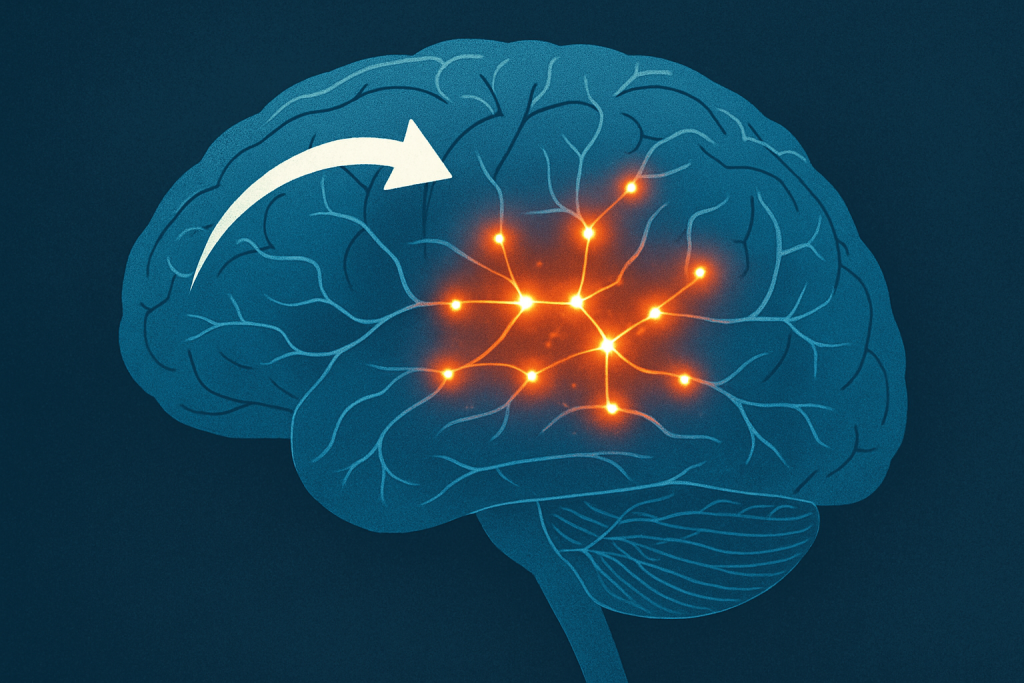
Enter Pain Reprocessing Therapy (PRT)
PRT is an evidence-based method developed by Alan Gordon and designed to teach your brain something revolutionary:
“Hey, you’re safe! These signals are just sensations and they are not dangerous.”
Think of PRT as a gentle software update for your nervous system—one that teaches your brain to stop sending false danger signals.
You and I work together to:
- Reinterpret pain as non-dangerous
- Retrain the brain to down-regulate the alarm
- Shift from fear and monitoring to confidence and safety
- Re-engage with movement and life in ways that shrink pain’s volume dial
It’s a bit like discovering the smoke detector has been reacting to burnt toast for ten years—and finally teaching it the difference between toast and a house fire.
Does It Work? Let’s Talk Evidence.
In 2021, the prestigious medical journal JAMA published a groundbreaking randomized controlled trial on PRT. The results were impressive:
- Two-thirds of participants were pain-free or nearly pain-free after four weeks of therapy
- Benefits held up one year later
- Participants showed measurable changes in brain activity, shifting from protection to safety
- The regular intervention group only had 10% of participants who had similar results and the placebo group had 20% of participants with greatly reduced or eliminated pain.
In other words: the brain can learn new patterns, and chronic pain can change—sometimes dramatically.

Why PRT Feels So Different (and So Hopeful)
People with chronic pain often come to me with a long history of being poked, scanned, stretched, injected, massaged, and sent home with a shrug. PRT offers something better:
✔ A science-based explanation for why your pain continues
✔ A clear path forward
✔ Tools to help you retrain the pain system
✔ A compassionate, collaborative process
✔ And yes—many people experience reduced pain or full relief
For many, discovering PRT feels like someone finally turned on the lights in a room they’ve been stumbling through for years.
Why I Chose to Train in PRT
As a therapist specializing in evidence-based, mind-body approaches, I want my clients to have every possible option for relief. After completing professional training through the Pain Reprocessing Therapy Center, I am listed in their official provider directory—and I’m thrilled to bring this work into my practice.
PRT isn’t magic, though sometimes it feels magical.
It’s neuroscience.
It’s compassion.
It’s learning your way back to safety.
And you don’t have to walk that path alone.
Want to Learn More—or Explore Whether PRT Is Right for You?
You can read more about Pain Reprocessing Therapy at the PRT Center website (https://www.painreprocessingtherapy.com/free-resources).
If you’re curious, hopeful, or even skeptical (all perfectly normal), I invite you to schedule an individual consultation with me. We’ll talk about your unique pain story and see whether PRT might be a good fit.
Your pain is real.
Your relief can be real, too—even if the solution looks different from what you’ve tried before.